
Here's the thing about timing
Orgasms aren't supposed to feel like a timed event you're either winning or losing. But when you're with a partner who finishes in eight minutes and you need twenty, or when you're solo and keep stopping yourself mid-way because you're tired of waiting, timing becomes a real barrier. It's not about speed. It's about finding your actual rhythm and trusting it.
That's where a lemon clitoral vibrator changes the game. Not because it makes you faster. But because it removes friction. The physical kind, obviously. But also the mental kind. When you're not working so hard to build sensation, you can actually pay attention to what's happening. And that attention is where consistency lives.
Why your timing feels off in the first place
Three common culprits are usually at work.
You're stuck in a partner's timeline. If you're used to syncing your pleasure to someone else's pace, your body learns to rush or hold back. That's not a personal failing. That's your nervous system doing exactly what you taught it to do.
You're not getting enough intensity early enough. Most people assume they need to build arousal slowly. Actually, you need enough stimulation right away to engage your clitoris fully. Without that initial signal, the rest of the chain reaction never gets going.
You're distracted by the effort. When manual stimulation takes all your focus, your brain can't do the other thing it needs to do during arousal. Which is basically get out of the way. Anxiety about whether it's going to happen at all absolutely tanks your chances.
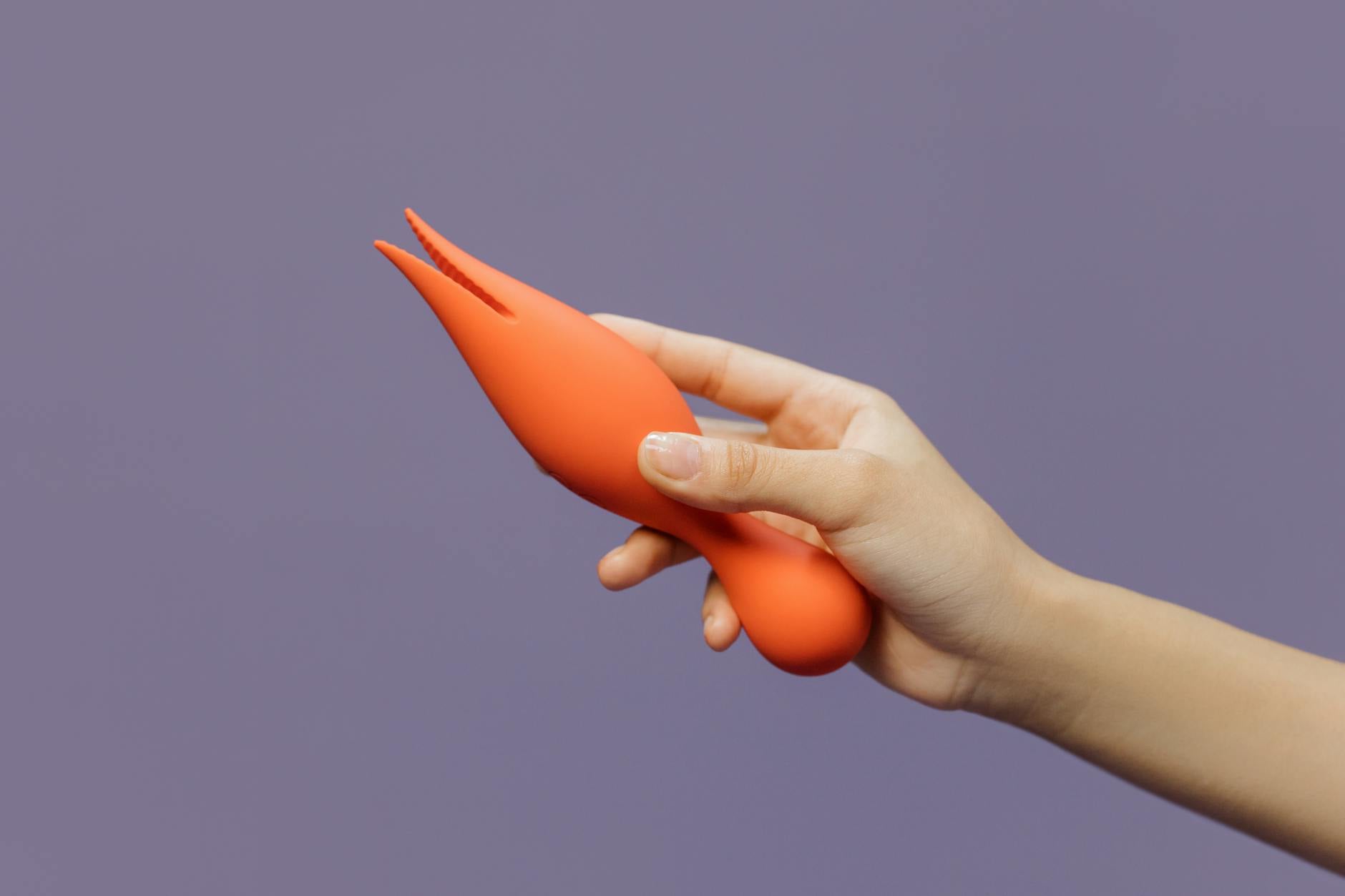
Photo by cottonbro studio on Pexels
When you're using a lemon vibrator, that effort vanishes. You're not thinking about technique. You're not wondering if you're doing it right. You're just receiving sensation and noticing what your body does with it.
Building your personal baseline
Every person has a unique arousal fingerprint. And consistency isn't about overriding that. It's about understanding it.
Start by using your lemon clitoral vibrator solo, without any partner expectation or timeline pressure. This is crucial. Solo exploration tells you what your body needs when there's nobody else in the room.
Begin at a lower intensity setting and spend five to ten minutes just feeling. Don't rush toward an orgasm. Pay attention to when your body signals that it wants more intensity. Notice whether you like steady rhythm or variation. Does your clitoris prefer direct contact or stimulation around the sides. Does your arousal build steadily or does it plateau for a bit then suddenly shift.
Write down what you notice. Yes, actually write it down. Our brains are weirdly good at forgetting our own pleasure blueprints. Having it visible changes everything.
Within three to five sessions, a pattern emerges. You'll know roughly how long you need, what intensity works, and what rhythm gets you there. That's your baseline. That's the information that makes you consistent.
Translating solo timing to partnered pleasure
Now here's where most people get stuck. They learn their timing alone and then assume nothing transfers over when a partner is involved.
Actually, the opposite is true. Knowing your baseline gives you language.
Instead of "I'm too slow" or "I take forever," you can say something like "I need about fifteen minutes of focused stimulation" or "I work best with steady rhythm, not switching patterns mid-way." That's useful information. Your partner can actually work with that.
One approach that works well. Use your lemon vibrator as part of partnered sex. Not instead of your partner. Alongside them. Your partner can provide other types of sensation while you handle the clitoral stimulation directly. This removes the pressure on them to be all things at once, and it gives you the specific input you need.
The orgasm often arrives faster when you're not waiting for someone else to figure out what works. Because you're not anxious. You're not holding back. You're just being direct about what you need.
The plateau problem
Some people hit a point during arousal where sensation plateaus. You're stimulated. You're aroused. But the progression toward orgasm stalls. You can stay right here indefinitely.
Usually, this means you need a shift in intensity or rhythm. Not a decrease. A change. Your clitoris is used to the current input and needs something slightly different to push forward.
With a lemon vibrator, that shift is simple. Move up one intensity level. Or change the pattern. You don't have to start over. You just nudge the sensation.
If you're with a partner, this is where communication helps. "I'm about to come, but I need a change. I'm going to move up to the next level." That's it. No mystery. No shame. Your partner sees you taking care of your own pleasure in real time. That's honestly really hot.
Timing and medication
Some medications genuinely complicate orgasm timing. Antidepressants. Certain blood pressure meds. Hormonal contraceptives. They can make it take longer, or feel less intense, or require more direct stimulation.
The fix isn't willpower. It's often a lemon clitoral vibrator. Not because vibrators are magic. But because they provide more concentrated, consistent stimulation than most other methods. When a medication is making your clitoris less responsive, you need more intensity to trigger the same response. A vibrator delivers that reliably.
If you're on medication that's changing your pleasure timeline, definitely talk to your doctor or a sex therapist. But also don't wait around hoping it magically improves on its own. A tool that works now is better than waiting.
The mental side of timing
Here's what I've seen work repeatedly with couples who struggle with timing mismatch. The person who takes longer stops viewing it as a problem.
You do this partly through the physical changes a lemon vibrator creates. Getting reliable, consistent orgasms shifts your nervous system. You're no longer in scarcity mode. You're not anxious about whether it's going to happen. You've confirmed through your own experience that it will. That calm is noticeable to your partner too.
You also do this by reframing the whole thing. How to use a lemon vibrator when you want to improve intimacy without talking about sex is about removing shame from the conversation. But part of removing shame is deciding that needing more time isn't a flaw. It's just information. And then actually using it.
When you're not stressed about timing, your body relaxes. When your body relaxes, orgasms come faster and feel better. It's counterintuitive, but it's real.
Creating consistency across different contexts
Here's a realistic problem. Your timing might be reliable solo, or reliable with one specific partner, but feels completely different with someone new. Or after a stressful day. Or in an unfamiliar place.
The variable isn't your body. It's your nervous system. New partners bring novelty and sometimes anxiety. Stress hijacks arousal. Unfamiliar spaces mean less privacy or comfort.
A lemon vibrator actually helps here because it becomes an anchor. It's familiar. It works the same way every time. It removes one variable. When you have that consistency, other variables matter less.
Some people use their lemon vibrator the same way every time for this reason. Same intensity, same rhythm, same duration. That predictability lets their nervous system relax. Everything else can be new or different or uncertain. But this one thing is reliable.
FAQ
How long should it actually take to have an orgasm with a vibrator?
Anywhere from two minutes to thirty minutes is completely normal. Your timeline isn't broken if it's on the longer end. Consistency matters more than speed. If you can reliably reach orgasm in fifteen minutes with a lemon vibrator, that's success. That's something you can work with, plan for, and explain to partners.
Can using a vibrator actually slow down my timing if I use it too much?
Not really. What changes is your nervous system's baseline sensitivity. If you've been using manual stimulation that requires intense pressure, switching to a vibrator that uses less force might feel like you need to use it more frequently. But you're not actually slowing down. You're just adjusting to a different input. Your body adapts.
What if my timing is inconsistent even when I use the lemon vibrator regularly?
That usually points to something outside the physical. Stress, relationship dynamics, medication changes, or hormonal shifts all affect timing. A vibrator is a reliable tool, but it can't override chronic stress or unresolved tension with a partner. If inconsistency persists despite trying different intensity levels and patterns, talking to a therapist or sex coach can help identify what's underneath.
Should I tell my partner I need a vibrator to orgasm consistently?
Yes, eventually. You don't need to make it a big confession. It's just information. "I noticed I get more consistent orgasms when I use a vibrator. Can we incorporate that into our sex?" Partners who care about your pleasure will want to know this. Partners who don't aren't actually your people.
Does consistent timing mean the orgasm will feel the same every time?
No. Consistency is about reliability, not sameness. You might have a quick, focused orgasm one time and a longer, deeper one the next. Both are consistent with your baseline because you reached them in your expected timeframe. The feeling can vary. The timing stays reliable.
Can I use a lemon vibrator if I'm taking antidepressants that affect sensation?
Yes. In fact, how to use a lemon vibrator when antidepressants numb your clitoris is a whole conversation. Antidepressants often require more intensity to reach the same sensation. A vibrator provides that without strain. Talk to your doctor if you want to adjust timing or dosage, but the vibrator is a useful tool in the meantime.
The bottom line
Timing issues with pleasure usually aren't about you being broken. They're about friction. Physical friction you're creating through effort, or mental friction you're creating through anxiety about whether it's going to happen.
A lemon clitoral vibrator removes both. You get reliable, consistent stimulation. Your nervous system gets to relax. And orgasms become something that happens on your timeline, not someone else's.
Start solo. Learn your actual rhythm. Then bring that information into partnered situations. That's how consistency works. Not by forcing speed. By understanding what your body actually needs and giving it that, reliably, until the whole thing feels like second nature.
Your pleasure deserves that attention. And you deserve to know exactly what you're capable of. Reach out to Lemon Clitoral if you want guidance on choosing the right vibrator for your body.