Let's be real about barrier methods and pleasure
Barrier protection is essential. And it also mutes sensation. Both things are true, and neither one negates the other. Condoms, dental dams, and latex gloves reduce direct skin-to-skin contact, which means less sensory feedback to your nervous system. That's their tradeoff for safety. The problem is that most people don't know how to compensate for that loss.
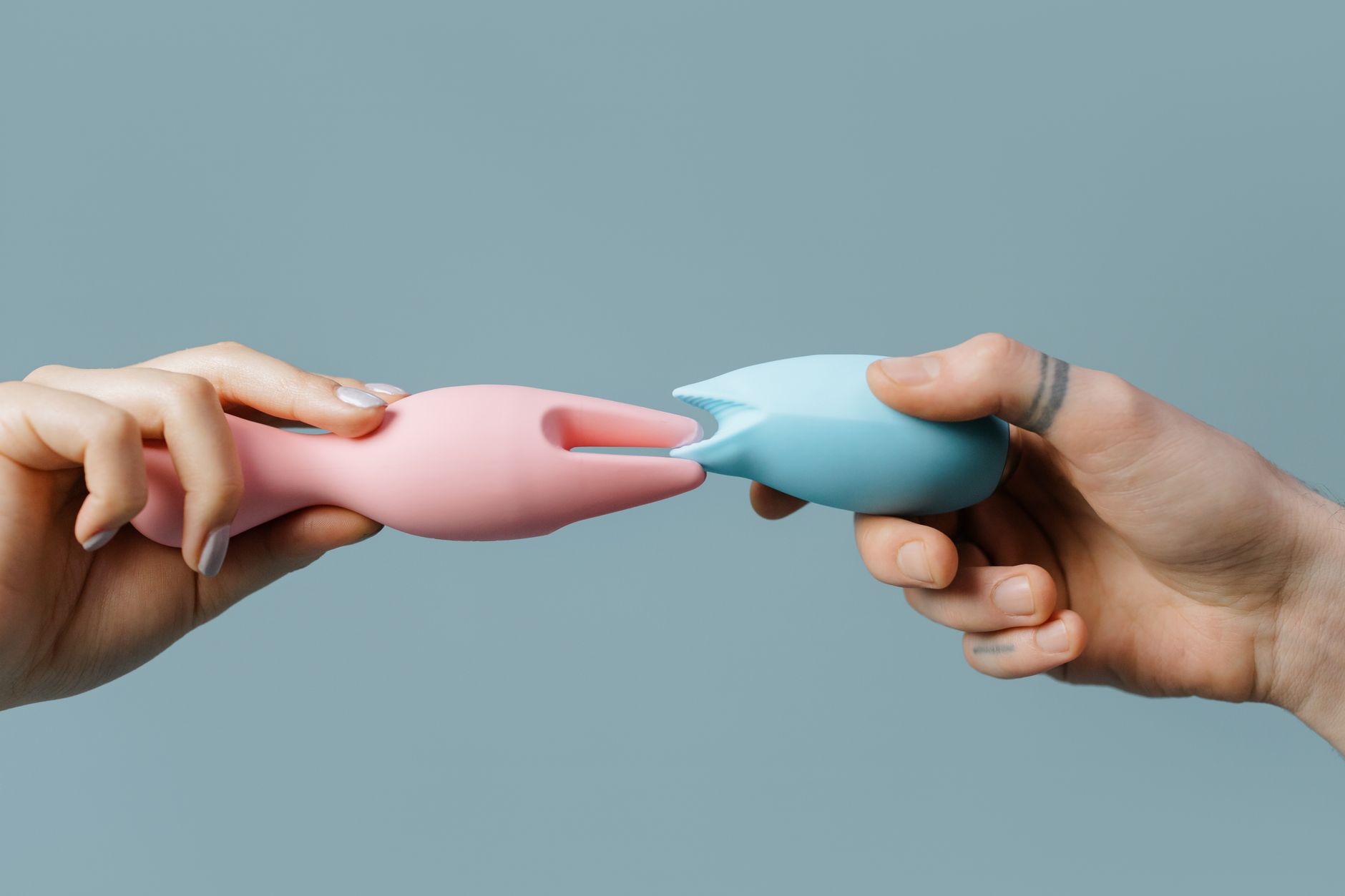
If you're using barrier methods and noticing that orgasms feel farther away, or that arousal takes longer to build, or that you feel less connected to what's happening down there, you're not broken. Your nervous system is just working harder to register sensation through an extra layer. The good news? A Lemon Clitoral vibrator is specifically designed to cut through that barrier and amplify the signal your body can actually receive.
How barrier methods change what you feel
Skin-to-skin contact transmits warmth, texture, and micro-vibrations that your touch receptors pick up automatically. Add latex or polyurethane into the chain, and those signals get muffled. Condoms are especially notorious for this. Even thin, high-quality ones reduce sensitivity by 10-20% for people with vulvas. Dental dams and gloves add even more material between nerve endings and stimulation.
Your clitoris has roughly 8,000 nerve endings packed into a small space. That's a lot of wiring. But when it's protected behind a barrier, those nerves have to work overtime to decode the signal. Arousal takes longer. Pleasure plateau feels less intense. Orgasm might require more mental focus and physical effort.
Here's the part that surprises people: this isn't a condom problem or a dam problem. It's a sensation-deficit problem. And it's fixable.
Why air-suction vibrators work better with barriers
Most vibrators rely on vibration alone. They buzz directly against tissue and hope that's enough stimulation to trigger nerve response. That works fine with direct skin contact. But when you add a barrier, that vibration gets dampened further because the material absorbs some of the motion before it reaches your clitoris.
Air-suction technology (like the Lemon Clitoral vibrator) works completely differently. Instead of vibrating the surface, it creates gentle pulses and suction patterns that stimulate through compression and release. This approach actually cuts through barriers better because suction doesn't depend on direct surface vibration. The sensation travels deeper into tissue, bypassing some of the material between you and the source.
In practical terms: a traditional vibrator under a condom often feels like a distant hum. A Lemon Clitoral vibrator under a condom still delivers localized, distinctive pressure and pulsing that you can feel clearly.
Setting realistic expectations (and then exceeding them)
Using a Lemon Clitoral vibrator with barrier methods won't completely restore pre-barrier sensation. That's the honest part. But it will restore about 70-80% of what you're missing. For most people, that's enough to get arousal building faster, reach orgasm more consistently, and feel genuinely present during pleasure.
The shift from 10-20% sensation loss back to 70-80% sensation recovery is huge. Your nervous system notices the difference. Your partner notices the difference. Most importantly, you feel the difference.
The practical setup: barriers plus lemon vibrators
Let's talk mechanics. If you're using a condom during partnered sex, you can use a clitoral vibrator at the same time. Most people don't know they have permission to do this, so they don't ask. Permission granted. A vibrator during penetration is standard practice in sex-positive communities worldwide. It's not unusual, it's not insulting to your partner, and it absolutely works.
A few setup options:
You holding the vibrator. This gives you total control over pressure, angle, and intensity. Some people prefer external stimulation while their partner focuses on penetration. This is the easiest first step if you're nervous about asking your partner to help.
Your partner holding the vibrator. Requires communication beforehand ("Hey, I want to try using my Lemon vibrator during sex, can you help me with it?"). But it often deepens connection because you're both actively involved in your pleasure. This works especially well if your partner is interested in learning what gets you off.
Hands-free or semi-hands-free. Panty vibrators exist for exactly this reason, but if you don't have one, you can also experiment with positioning to hold a smaller vibrator in place using your own pressure or your partner's hand.
With a dental dam during oral sex, your partner can use the vibrator on you through the dam. Communication again: "Can you hold my Lemon vibrator against this while you use the dam?" Most partners are enthusiastic about this because it increases sensation for everyone.
Lubrication and barriers: the multiplier effect
This is the secret move that most people miss. If you add water-based lube to the outside of a condom or the surface of a dental dam, it reduces friction and actually improves vibration transmission. The lube acts as a conductor between the barrier material and your skin.
Use a few drops of water-based lube on the outside of the condom before you start clitoral stimulation. Or spread lube across the dam surface. This small addition often increases sensation by another 10-15%. Combined with the air-suction advantage of a Lemon Clitoral vibrator, you're back to near-full sensation with full protection.
Never use silicone-based or oil-based lube with condoms or latex dams. Water-based is your only safe option.
The mental game: staying present despite the barrier
Half of barrier-method sensation loss is physical. The other half is mental. When you know something is between you and your partner, your brain spends energy thinking about that fact instead of focusing on pleasure.
Here's a reframe that works: the barrier isn't reducing pleasure, it's redirecting it. Instead of expecting the same sensation as unprotected contact, you're training your nervous system to find pleasure in a different stimulus pattern. That's not degraded pleasure. That's different pleasure. And often, once you stop comparing it to an imagined "better" version, you find it's actually quite good.
Using a lemon sexual toy gives your brain something active to focus on besides the barrier. You're not trying to feel past the condom. You're actively engaging with stimulation that works through it. This shift from passive-frustration to active-engagement is huge for staying aroused and present.
Communication patterns that actually work
If you have a partner, the conversation matters more than the toy. Here's what works:
"I've noticed that sensation feels muted during protected sex. I want to try using my Lemon vibrator during sex so I can feel more connected to what's happening. Would you be open to that?" This is direct, solution-focused, and doesn't ask for permission from someone who has no authority over your own pleasure.
If your partner seems hesitant, check in on what they're actually worried about. Usually it's one of three things: they think it means penetration isn't "enough" for you (it often isn't, and that's normal), they're not sure how to help, or they have old messaging that using toys means their partner isn't satisfied. None of these are true, but they need naming.
When to upgrade your barrier options
Some barriers muffle sensation more than others. If you're using super-thick condoms because you're worried about breakage, that might be the real issue. Newer condoms (Skyn, Lelo, Sustain) are thinner and transmit sensation better than older brands. Same for dams and gloves. Nitrile gloves transmit more sensation than latex. Latex dams transmit more than plastic ones.
If you've been using bargain condoms and have access to better ones, upgrading is worth trying before assuming the problem is unfixable. But even with budget barriers, a Lemon Clitoral vibrator absolutely helps.
The longer-term benefit nobody talks about
Here's something that happens when you get really good at using a vibrator during partnered sex with barriers: you stop resenting the barrier. You stop feeling like it's stealing something from you. Instead, you develop a full-body pleasure pattern that doesn't depend on one specific sensation.
That's a skill that lasts. Even when you're not using barriers, you'll find you have more control, more awareness, and more access to different types of pleasure. The barrier method becomes less of a limitation and more of a puzzle you've solved.
Frequently asked questions
Can I use a clitoral vibrator directly on a condom without any issues?
Yes, completely safe. The vibrator sits on top of the condom. The condom protects against STI and pregnancy transmission. Vibration doesn't compromise either function. The only consideration is pressure, which I'll address next.
Will vibrator pressure on a condom cause it to break?
No. Clitoral vibrators apply gentle to moderate pressure. They're not forcing anything into the condom or grinding it against anything sharp. Modern condoms are engineered to handle normal sex. A vibrator is less force than most sexual activity. If you're nervous, start with lower intensity settings and work up.
What's the best position for using a clitoral vibrator during condom-protected sex?
There's no single "best." Positions that expose your clitoris (you on top, sitting facing each other, spooning from behind) work naturally. Positions where your clitoris is hard to access during penetration work less naturally but are still possible. You or your partner simply holds the vibrator in place. What matters is what feels good, not what looks like it should work.
How do I ask my partner to help hold the vibrator without feeling awkward?
Practice the sentence out loud before you say it. Awkwardness lives in silence and ambiguity. Once you say it clearly ("I want to use my Lemon vibrator during sex, can you help hold it?"), the awkwardness usually disappears. If your partner is defensive or dismissive, that's information about something other than the vibrator.
Does using a vibrator mean the barrier method isn't working?
No. Barriers work independently of what happens at your clitoris. The barrier prevents fluids from mixing. Your pleasure source doesn't change that function. This is one of the most common anxiety myths and it's not supported by anything real.
Are there barrier methods specifically designed to work better with vibrators?
Not officially marketed that way, but yes. Nitrile condoms and gloves transmit vibration better than latex. Thin condoms transmit better than thick. Latex dams transmit better than plastic. If sensation is a priority and you have options, these choices matter.
Here's what actually changes
Barriers don't end pleasure. They ask you to be more intentional about how you access it. A Lemon Clitoral vibrator is exactly the right tool for that intentionality. It amplifies signal through barriers, gives you direct control over stimulation, and lets you stay actively engaged with your own pleasure rather than passively hoping sensation gets through.
You deserve full pleasure with full protection. That's not a compromise. That's exactly how it's supposed to work.