
The pattern nobody talks about
You moved in together three months ago. Everything felt right. The lease was signed, the boxes unpacked, and you were thrilled. Then something shifted. Not the relationship. The desire. Your partner initiates less. You feel less interested. The sex that used to happen three times a week dropped to once. Or stopped entirely.
This is so common that it's almost predictable. And because nobody warns you about it, you assume something is broken. It isn't.
What's happening is a shift in novelty and neurochemistry. Early relationships live on dopamine spikes. The uncertainty, the discovery, the newness of someone's body and rhythms. When you collapse that uncertainty by building routine and safety, the dopamine system recalibrates. This is normal neurobiology, not a sign that the spark died.
Why milestones specifically trigger this
Moving in together, engagement, marriage, buying a house. These moments carry weight and expectation. You've now made a public commitment. The stakes feel higher. Paradoxically, this shift toward security and permanence can make sex feel less urgent, less transgressive, less novel.
For some couples, the desire drop lasts weeks. For others, months. The timeline depends on how much of your sexual identity was built on the chase versus the connection.
There's also a practical layer. Moving in together usually means more logistical management. Money talks. Whose stuff goes where. Household labor negotiations. These conversations, while necessary, consume the emotional and cognitive bandwidth that used to feed desire. Your brain is genuinely more occupied.
The mistake most couples make
Here's where I see couples derail. One partner (often the one whose desire dropped first) assumes it reflects the relationship's health. "If I really wanted them, I'd still want sex." The other partner takes the drop personally. "They're not attracted to me anymore." Both interpretations are usually wrong.
What's actually true: desire is contextual. It responds to novelty, safety, mental space, physical health, stress levels, and whether you feel genuinely seen by your partner. A relationship milestone didn't break any of those things. But the transition period did disrupt the old conditions that fed desire, and the new conditions haven't settled yet.
The couples who recover desire fastest are the ones who name this honestly instead of waiting for spontaneous recovery. Spontaneous recovery sometimes happens. Mostly it doesn't.
How lemon vibrators fit into the reset
A lemon clitoral vibrator reframes pleasure away from performance and toward sensation. This matters specifically during the post-milestone flatness because you're not trying to "prove" anything to your partner. You're not solving a problem. You're just exploring what feels good in your body right now.
When desire is low, touching your partner can feel like an obligation you're not sure you want. Touching yourself with a tool designed for pleasure is different. It's permission. It's also data collection. Your body teaches you what you need right now.
Start with solo exploration. Not because your partner is off the table. But because reconnecting with your own arousal is the foundation for reconnecting with theirs.
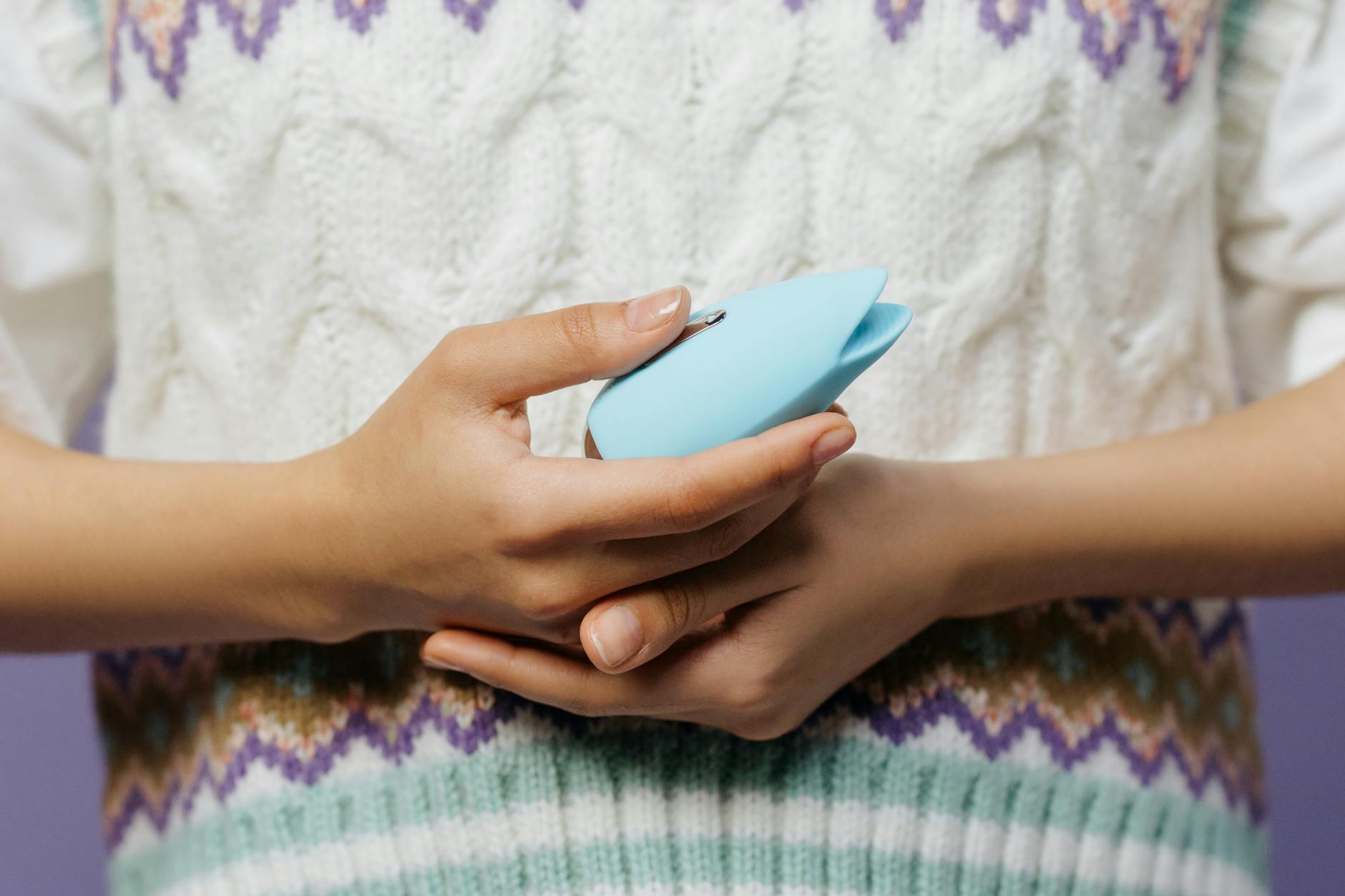
Photo by cottonbro studio on Pexels
The solo phase (2-3 weeks)
Set aside 15-20 minutes. Not a huge time commitment. But enough to actually feel something instead of just going through motions. A lemon vibrator is intuitive to use, so there's no learning curve that kills the mood.
Start at a lower intensity setting. Build slowly. Pay attention to what patterns make you feel more interested in sensation. Are you drawn to steady vibration or rhythmic pulsing? Do you like focusing only on your clitoris or incorporating broader pressure? Does penetration appeal to you right now or feel like too much?
These answers shift depending on your cycle, your stress level, and what your nervous system needs. Right now, your nervous system probably needs to feel something simple and reliable.
Don't perform pleasure for anyone (even in your own mind). If you don't orgasm, that's information, not failure. If you feel numb, that's also information. Write down what worked. What didn't. How you felt afterward.
This solo phase is the part that feels weird if you're used to sex being partnered. Do it anyway. Your arousal pathway has been on low idle for months. It needs to remember what activation feels like.
Bringing it back to your partner
After a few weeks of solo exploration, you have two options.
Option one: invite them into the ritual. "I've been exploring what feels good. I want to show you. No pressure on either of us to do anything beyond watching and connecting."
Partners often feel relieved by this invitation. You're not asking them to fix your desire or prove theirs. You're inviting them to witness your pleasure, which is a completely different energy.
Many couples find that witnessing their partner's genuine arousal (not performed arousal, genuine arousal) reignites something. Desire is contagious in the best way.
Option two: keep exploring solo for longer, but talk about it. Tell your partner what you're learning about your own body. "I realized I've been too much in my head. I'm trying to reconnect with what actually feels good." This kind of transparency builds intimacy even when you're not touching.
Some couples move toward partnered use naturally. Others find that solo practice plus honest conversation is enough to reset the system. Both are fine.
The three-month reset
Most couples I work with find that the libido flatness eases after three months of intentional reconnection. Not because they're trying harder. Because they've adjusted to the new reality and stopped treating desire like it should be automatic.
Here's what actually shifts.
First, the novelty of the milestone itself settles. The logistical overwhelm eases. Your brain has more room for desire again.
Second, you've built a new ritual around pleasure that doesn't depend on spontaneous sparks. Rituals are actually more reliable than spontaneity. They create their own momentum.
Third, you've separated performance from pleasure. This unlocks a lot of people. When you're not trying to prove that you still want your partner, wanting your partner actually becomes easier.
When to worry (and when not to)
A libido dip after a relationship milestone is normal. A complete numbness to pleasure that persists beyond three months might signal something else. Depression, hormonal shifts, medication changes, unprocessed conflict.
If you've been using a lemon vibrator consistently and your solo arousal still feels completely flat, that's worth checking with a doctor or therapist. Not because something is shameful, but because a sudden shift in arousal can point to things worth understanding.
But a few months of "we're settling in and we both feel less interested"? That's the system recalibrating. It responds to attention, conversation, and permission to explore on your own terms.
The conversation you probably need to have
Don't wait for desire to magically return before you talk about it. Name the pattern. "I've noticed we're both less interested since we moved in. This is normal. I want to figure this out together rather than waiting for it to fix itself."
Then listen to what your partner needs. They might need reassurance that you still find them attractive. They might need more physical affection that isn't about sex. They might need to know that the flatness isn't their fault.
A lemon vibrator is a tool, not a solution. But it's a useful one because it gives you concrete time to reconnect with your own desire, which is the only basis for rebuilding mutual desire.
Your desire didn't disappear. It paused. And pauses are temporary if you treat them with honesty instead of shame.
People also ask
Why does moving in together kill libido?
Moving in collapses novelty and uncertainty, which are major drivers of early-relationship dopamine. You've also added practical stress and cognitive load to daily life. Your brain has less bandwidth for desire. This is normal neurobiology, not a sign that the relationship is flawed. Most couples see this return once the novelty of the move itself settles and you build new rituals around intimacy.
How long does it usually take for libido to return after engagement?
For most couples, the initial flatness eases within three to six months. But this timeline depends on how much conversation and intentional reconnection happens. If you wait for spontaneous recovery, it often takes longer. If you name the pattern and actively explore pleasure (solo or together), it usually resets faster. How to use a lemon vibrator when both partners have lower sex drive offers more strategies for when the drop affects both of you equally.
Is it normal to not want sex right after moving in together?
Yes. Extremely normal. You're building new routines, managing logistics, establishing boundaries in shared space, and adjusting to less privacy. All of this is cognitively demanding. It doesn't mean you don't love your partner. It means your brain is busy. The desire usually returns once the setup phase settles, especially if you actively reconnect with solo pleasure and honest conversation.
Can a clitoral vibrator help if my desire has completely shut down?
A lemon vibrator can help you reconnect with what pleasure feels like in your body, but if your desire is completely flat (not just low, but genuinely numb), that's worth investigating with a doctor first. Desire flatness can signal depression, hormonal changes, medication side effects, or unresolved relationship conflict. A vibrator is a great tool for the normal post-milestone dip, but it's not a substitute for addressing deeper issues if they exist.
Should I use a lemon vibrator with my partner during this low-desire phase?
That depends on your comfort level. Many couples find that solo exploration first helps you reconnect with your own arousal without performance pressure. After a few weeks, inviting your partner to witness your pleasure (not necessarily participate) can reignite mutual attraction. There's no single right approach. Start with what feels least vulnerable, then build from there.
What if my partner thinks a vibrator means I'm not attracted to them?
This is a real fear, so address it directly before you start using one. "I'm exploring what my body needs right now. This isn't about you. It's about me reconnecting with pleasure so I can show up more fully in our sex life." Many partners feel relieved when they understand it's about recovery, not replacement. If your partner remains resistant, how to use a lemon vibrator with your partner for better intimacy includes strategies for building trust around toy use together.
The reset takes intention, not more
You don't need to have more sex. You need to have more honest conversation and more intentional reconnection with your own desire. A lemon vibrator is useful for that second part. It gives you a tool to remember what arousal feels like in your body, separate from performance or obligation.
Milestones shift relationships. That's expected. But flatness doesn't have to be permanent. It's usually just your system recalibrating. Treat it like what it is: a pause, not an ending.
If you'd like to talk through what's happening in your specific situation, reach out. I work with couples navigating exactly this transition.