Here's what nobody tells you about the orgasm gap
You can orgasm alone. You can make it happen reliably, intensely, exactly how you want it. Then you get with a partner and something shifts. The pressure mounts. Your body stays stuck in neutral. Suddenly you're performing arousal instead of feeling it, and the harder you try, the further away orgasm gets.
This isn't broken. This is wildly common.
The research backs this up. Studies show that partnered orgasm requires a completely different neurological state than solo orgasm. Solo pleasure is focused, controlled, purely about sensation. Partnered sex layers in performance anxiety, timing concerns, partner pleasure, and a thousand micro-negotiations your brain is running in the background. Your nervous system registers all of it as friction.
Why your body responds differently with someone else present
When you're alone, you're in what I call the "pleasure circuit." Your focus narrows. Your nervous system downregulates. You know exactly what your body needs and you can deliver it. There's zero performance component.
Add a partner and your brain shifts to the "connection circuit." Suddenly you're attuned to their breathing, their feedback, their timing. You're reading microexpressions. You're calibrating intensity based on their rhythm, not your own. Your prefrontal cortex is working overtime managing all these variables. Orgasm, which requires a certain kind of mental surrender, becomes harder to access.
Throw in the specific expectation that you should orgasm during penetrative sex, and you've created a scenario where success is already neurologically unlikely. Most people with vulvas don't orgasm from penetration alone. The angle is wrong, the stimulation pattern is wrong, the timing doesn't align. So you're already fighting an uphill battle before you even start.
The vibrator changes the equation, not the relationship
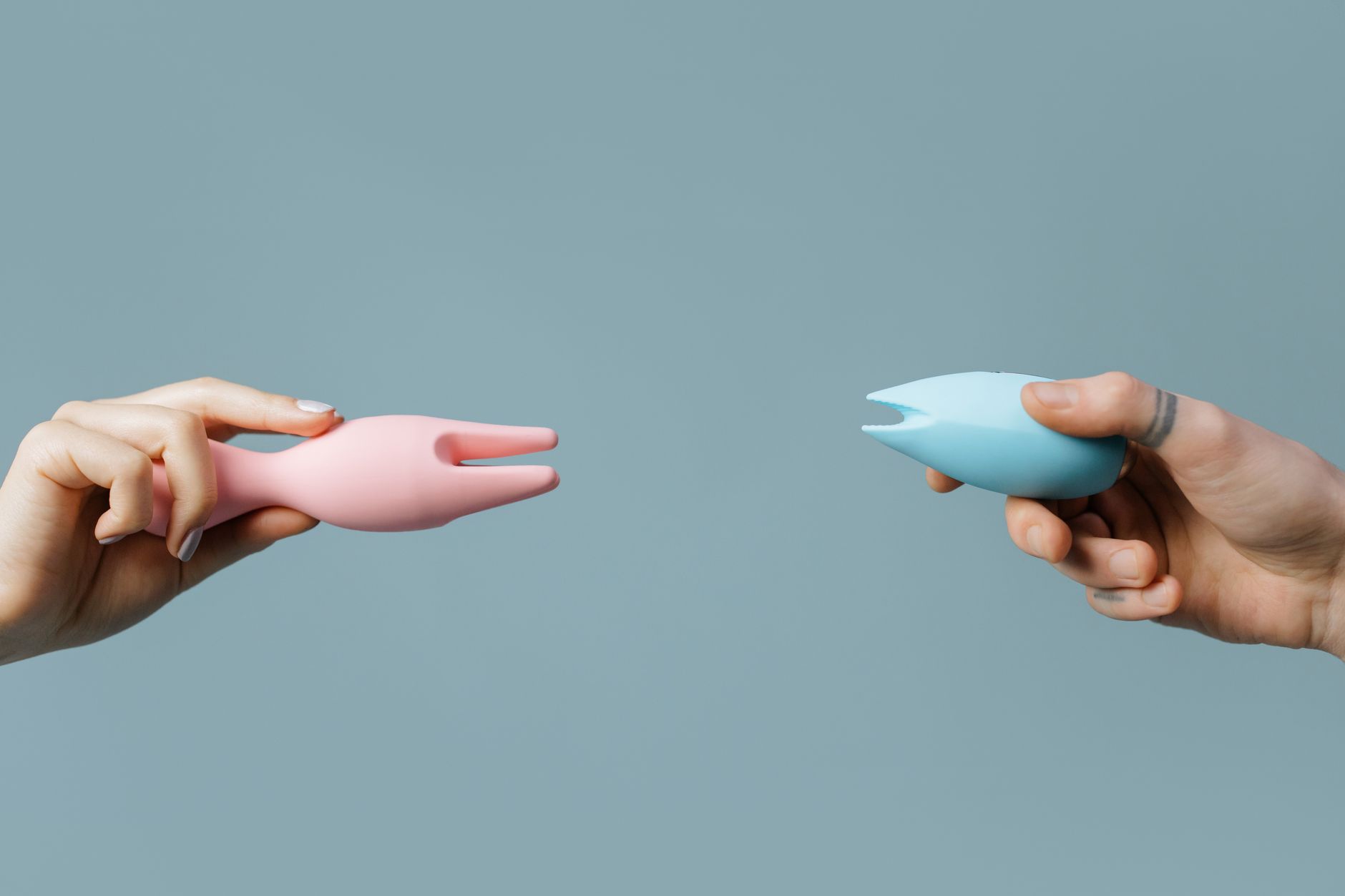
A lemon clitoral vibrator like the Lem doesn't fix your partner or your relationship. It does something simpler and more powerful. It removes one specific variable: the friction between what your body needs to orgasm and what partnered sex typically provides.
When you introduce a Lem during partnered sex, you're saying: "I need direct clitoral stimulation to orgasm. Here's how we get there together." You're not criticizing. You're not saying your partner is failing. You're offering a practical solution to a biological reality.
The suction stimulation of a Lem vibrator is particularly useful here because it feels distinct from partnered touch. Your nervous system registers it as separate from the performance dynamic. It's not their hands, so there's less of that anxious feedback loop. It's just sensation. Your body can relax into it while maintaining closeness and connection.
How to introduce this conversation without shame
Timing matters. Don't have this talk during sex. Have it clothed, outside the bedroom, when you're both calm. Here's a template:
"I've noticed I have a harder time orgasming during partner sex than when I'm alone. I don't think it's about you. I think it's about my nervous system. I get in my head, I start managing your pleasure, and I lose track of my own sensation. I want to change that because I enjoy our sex and I want to be fully in it with you. I'm thinking about trying a vibrator during sex, specifically something like a Lem that gives me consistent stimulation. Would you be open to trying that together?"
This frame does three things: it normalizes the gap, it takes the pressure off your partner, and it presents the vibrator as a tool for both of you, not a replacement. Most partners want their partner to feel good. When you phrase it as "this helps me be more present," most are genuinely open to it.
If your partner expresses hesitation, ask what the hesitation is. Common ones:
"Does that mean I'm not enough?" No. You're enough for connection and pleasure. Your body has a specific stimulation pattern for orgasm. That's physiology, not a referendum on your partner.
"Will you get dependent on it?" Some people do prefer vibrator orgasms. That's worth naming. The conversation then becomes: what kind of partnered sex do you both actually want? Do you want orgasm as a goal during every encounter? Or is partnered sex sometimes about connection and sometimes about individual pleasure?
"I want to make you orgasm." That's sweet and also a setup for disappointment if his hands can't match the Lem's pattern. Reframe: "You can. You're doing it by being here, by supporting me, by being willing to explore this together."
The first time using a vibrator together
Start with you directing it. You know where it needs to be, what speed works, what pattern builds arousal. Don't hand him the controls and expect him to intuitively know. That's asking him to troubleshoot your body while maintaining his own arousal. Set him up to win.
You could say: "I'm going to use this during sex. You can keep doing what you're doing, or we can try something different. Let me know what feels good to you." This keeps both of you focused on your own pleasure rather than creating an audience dynamic.
Low-pressure first time looks like: start with foreplay, introduce the Lem at medium intensity when you're already in arousal, and let your partner see how your body responds. Seeing genuine pleasure on your face is often the reassurance partners need. It stops feeling theoretical and becomes real.
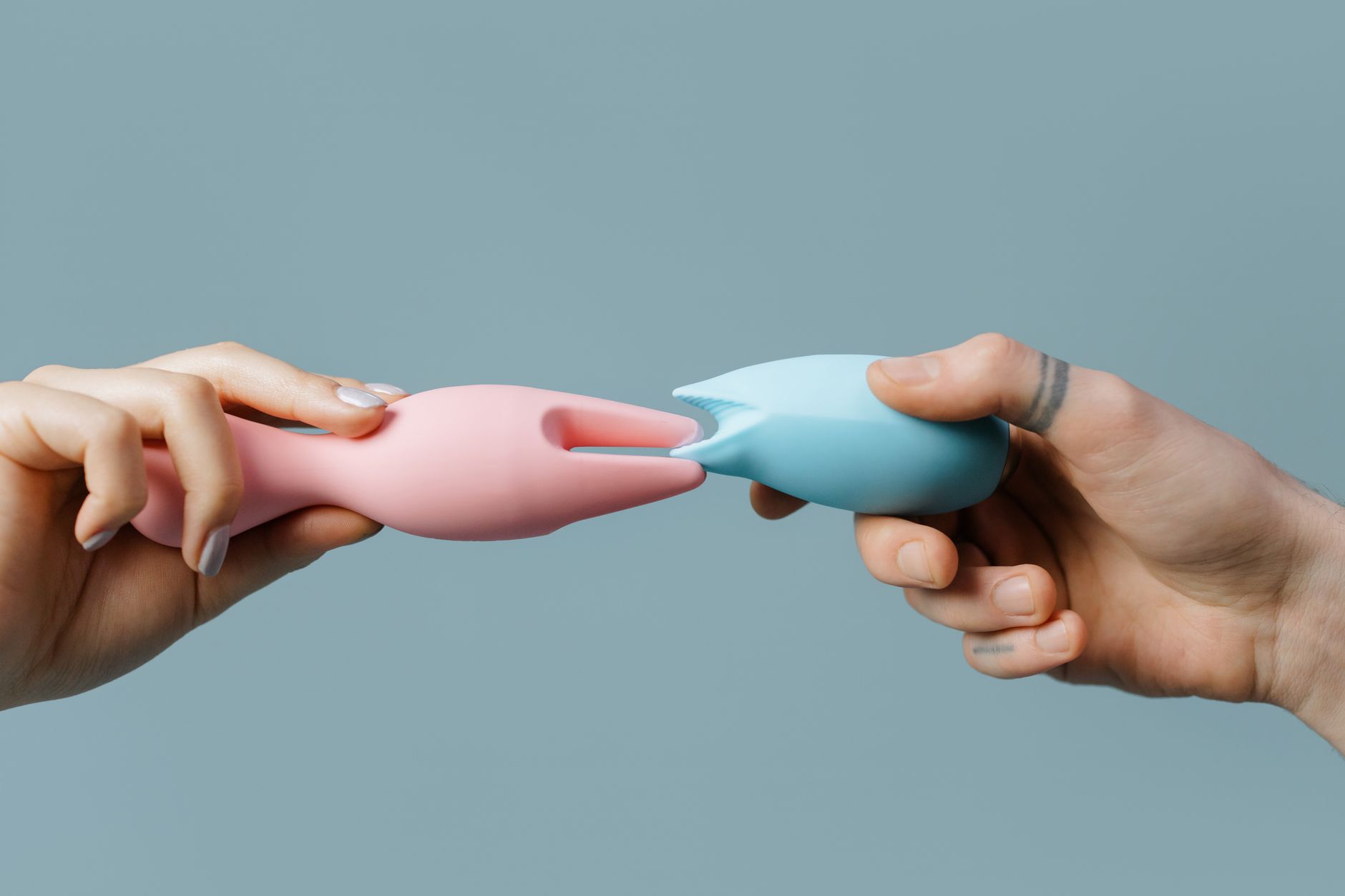
Photo by cottonbro studio on Pexels
The pattern that actually works for dual pleasure
Here's what I see work best with couples where one partner was struggling to orgasm during sex.
Start with oral sex or manual stimulation. Use the Lem at settings 2-4 (medium intensity) while your partner is inside you or entering you. The suction stimulation gives you what you need while your partner gets the tightness and friction they're seeking. You're both getting direct input, not compromised positions.
Or try this: partner penetrates while you hold the Lem against your clitoris. You control angle, pressure, speed. They control depth and rhythm. You're not performing, you're collaborating on a shared experience.
The key is that you're not passively waiting for stimulation. You're actively engaged in your own pleasure while maintaining intimacy and connection.
What happens when you do orgasm with them
Many people report that the first partnered orgasm with a vibrator feels shocking. You're so used to the struggle that actual ease feels like relief. You might cry. You might laugh. That's normal.
There's also often a learning effect. Your nervous system realizes it's safe to let go in partnered contexts. Some people find that after using a vibrator successfully during sex a few times, they can eventually orgasm with partner stimulation alone, because their body has new evidence that partner sex can feel good without catastrophizing.
Not everyone gets there, and that's fine too. Some people prefer partnered sex without orgasm as the goal. Once you've removed the pressure to orgasm, sex becomes different. Lighter. More playful.
When to revisit the conversation
Needs shift. If the Lem stops working as well, if positions change, if your medication shifts arousal, if your relationship dynamics shift. Check in every six months or after major life changes. "How's our sex life feeling to you? Is anything we want to adjust?" You're not criticizing. You're maintaining. Couples who talk about sex regularly tend to keep having better sex over time.
Likewise, if this becomes the only way you can orgasm during partnered sex, that's information worth exploring with a therapist if you want more flexibility. Sometimes it's purely physiological and that's your answer. Sometimes there's an anxiety component that's addressable.
The goal isn't to force yourself into partnered orgasms if that's not your body's path. The goal is to have the kind of sex life you actually want, with communication and tools and realistic expectations.
People also ask
Does using a Lem during partnered sex eventually make it harder to orgasm without one?
Some people report that sensation fatigue is real. If you use the same vibrator at the same intensity every time, your nervous system can adapt. That's why most people benefit from varying settings, taking breaks, and sometimes using different stimulation. It's not that the Lem breaks you. It's that your body is genuinely efficient at pattern recognition and adaptation. Mixing it up keeps sensation fresh.
What if my partner wants to use the Lem on me but I feel awkward receiving?
That's actually a different intimacy issue than the vibrator itself. Some people struggle with receiving pleasure, with being "done to" rather than "doing." Start by using the vibrator on yourself during partnered sex. Your partner can watch, can be close, can maintain other contact. Then you can gradually hand over control if that feels right. No timeline is too slow.
Can I use a Lem if I'm on antidepressants that affect arousal?
Yes. The Lem can sometimes help bypass the deadening effect of SSRIs on sensation because the suction stimulation is more intense than typical touch. That said, if your medication is significantly dampening arousal, that's a separate conversation with your prescriber. The vibrator is a workaround, not a solution to the underlying issue. Many people find that switching medication times or adjusting doses helps, separate from the vibrator.
What if introducing a vibrator during partnered sex feels like admitting failure?
It's not failure. It's literally the opposite. You're identifying what your body needs and you're asking for it. That's assertiveness. That's self-knowledge. That's honestly the foundation of better sex. Every couple that successfully navigates a sexual gap has had some version of this conversation. You're not broken. You're normal.
How do I know if difficulty orgasming with my partner is a relationship issue or a body issue?
Quick diagnostic: if you can orgasm alone reliably and quickly, but not with a partner no matter what they do, it's likely nervous system-based, not a reflection of their skill or your attraction. If you can't orgasm alone either, or if you notice your desire for your partner has dropped overall, that might be relational or medical. It's worth talking to a therapist or doctor. If it's specifically partnered sex that's the gap, a vibrator often closes it.
Is it normal to need a vibrator to orgasm with a partner if I didn't before?
Yes. Bodies change. Hormones shift. Medications shift. Relationship stress affects arousal. You might have orgasmed with an ex but not with a current partner, and it's not about attraction. It's about nervous system state, comfort level, specific body compatibility, a thousand factors. You're not regressing. Your body is just communicating different needs.
The bigger picture: introducing a lemon clitoral vibrator into partnered sex isn't about fixing something broken. It's about removing unnecessary obstacles between you and the pleasure you deserve. Your partner wants you to feel good. You want to feel good. The Lem is just the practical tool that makes that possible. Everything else. Communication, boundaries, check-ins. That's the real work. And it's the work that actually transforms sex over time.