
Let's name the tension nobody wants to say out loud
One of you wants sex twice a week. The other wants it once a month. Maybe the gap is even wider. The partner with higher desire feels rejected. The partner with lower desire feels pressured. Both start resenting each other. Neither is wrong. This is just what happens when libidos don't sync up.
Here's what I've learned working with couples: the gap itself isn't the problem. The silence about it is. And once you open that conversation, tools like lemon vibrators become a bridge instead of an awkward workaround.
Why libido mismatch happens (and it's not what you think)
Most people assume the lower-desire partner just isn't attracted anymore. Sometimes that's true. Way more often, it's something else entirely. Exhaustion. Stress at work. Not enough foreplay. Body image anxiety. Hormonal shifts. Antidepressants. Sometimes it's all five at once.
The higher-desire partner often assumes the solution is more initiation, more compliments, more persistence. That usually makes it worse. When someone with lower libido feels pressure, their desire actually decreases. It's neurological. The nervous system shifts into protective mode, and pleasure gets pushed further away.
This is where vibrators become genuinely useful. Not as a substitute for sex with your partner, but as a third option. A way for the lower-desire partner to take action on their own terms. A way for the higher-desire partner to feel wanted without waiting passively. A way for both of you to feel agency.
The three patterns that actually help
Pattern one: Solo satisfaction on non-sex days.
Your partner wants sex twice a week. You want it once. Instead of skipping a day and building resentment, try this. On the "off" day, take 15 minutes alone with a lemon clitoral vibrator. Your partner doesn't need to watch. They just need to know it's happening. This does three things simultaneously. It gives your partner's desire an outlet. It means you're thinking about pleasure, which often primes interest for the next scheduled day. And it separates "my pleasure" from "what my partner needs," which takes the pressure off both of you.
Pattern two: Pleasure as foreplay.
Let's say you're heading toward sex with your partner. You're not quite there yet, though. Start with your lemon vibrator alone for 10 minutes while your partner watches (if that's comfortable for you both) or gets themselves ready nearby. You'll warm up faster. Your arousal is real, not forced. And your partner gets to see you take pleasure seriously. This often flips the dynamic from "my partner demanding sex" to "oh, I want to be part of this."
Pattern three: Side-by-side solo play.
This one's less common but wildly effective for some couples. You're both in bed. You're both using vibrators on yourselves while touching each other or simply being present. Nobody's performing. Nobody's watching. You're each managing your own arousal at your own pace. Then you decide mid-play whether partnered sex happens. Sometimes it does. Sometimes you both just finish separately and fall asleep. Either way, both of you got pleasure. Desire got met. No resentment.
The conversation before you bring in a toy
Here's the mistake I see constantly. Someone buys a vibrator expecting it to fix things. Then they introduce it without talking about what it means. The higher-desire partner feels replaced. The lower-desire partner feels even more pressure because now there's this tool sitting between you.
Start here. Tell your partner what you're thinking. "I've been feeling pressure, and I think I want to explore my own pleasure more independently. It might take some pressure off both of us." Or: "I want you to feel satisfied. I know I don't always match your rhythm, and I want to find a way that works." Or just be direct: "I'm thinking about trying a vibrator. I wanted to talk about it first."
Then listen. Your partner might love the idea. They might feel weird about it. They might ask questions. All of that is valid. You're not trying to convince them. You're just being honest.
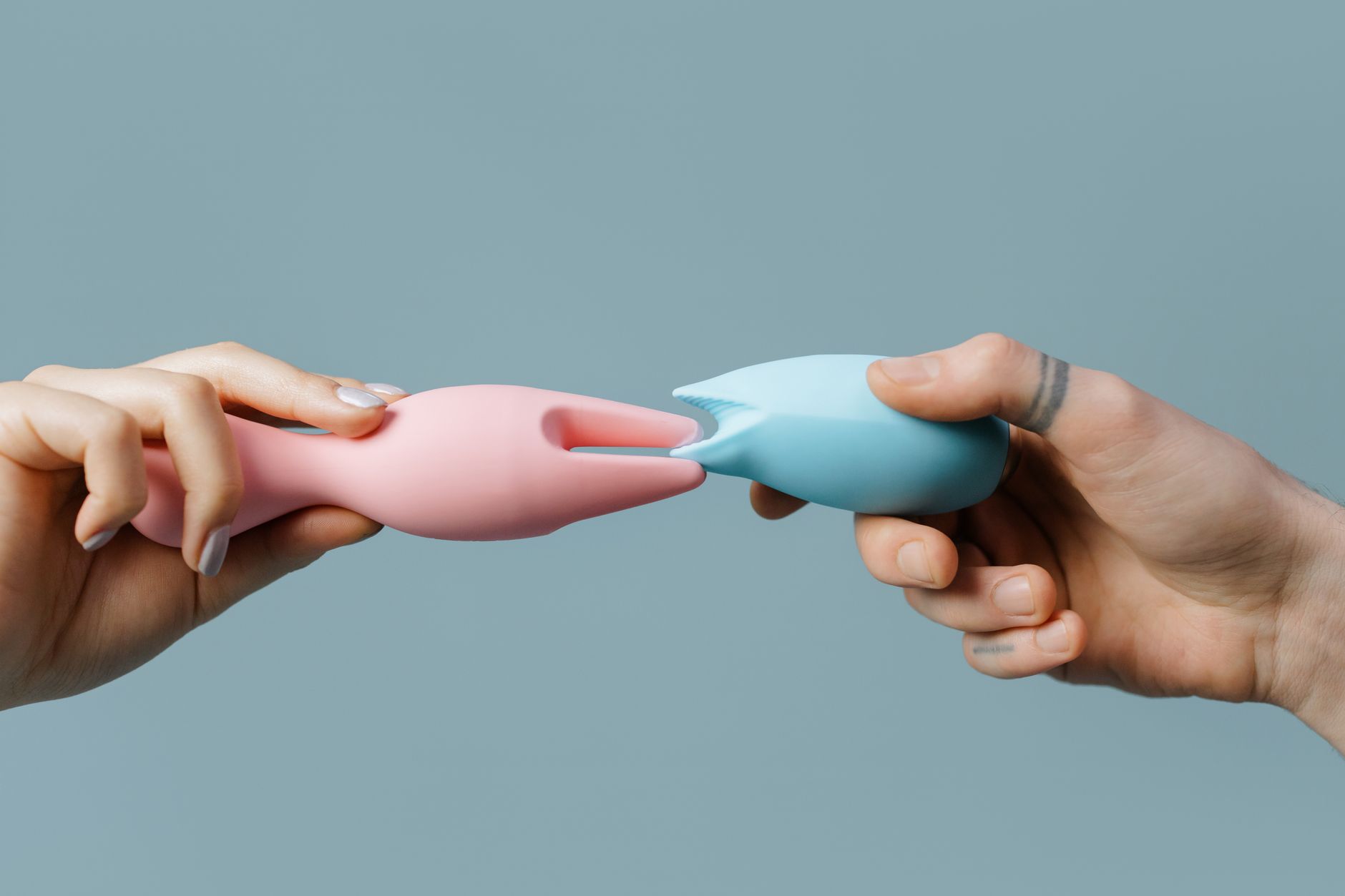
Photo by cottonbro studio on Pexels
Why lemon clitoral vibrators specifically help here
The design of a lemon vibrator matters when desire is mismatched. It's compact. It's fast. You can go from zero to orgasm in minutes if you want to, which means solo play doesn't feel like a time commitment. It's also visibly a tool for pleasure, not a substitute for a partner. Nobody confuses it with partnered sex.
The suction patterns (if you're using the air-pulse style) feel completely different from partnered touch. So when you use one alone, it's not "practicing" for sex. It's a distinct experience. That separation actually helps couples. The higher-desire partner doesn't feel replaced because it's a totally different sensation. The lower-desire partner doesn't feel like they're doing a job because it's clearly just for them.
When desire starts shifting
Here's what happens in a lot of relationships once you get out of the resentment cycle. After a few months of the lower-desire partner having regular solo pleasure with a vibrator, libido often increases. Not always. But often. Why? Because pleasure begets desire. Your nervous system relaxes. Sex stops feeling like an obligation. You start thinking about it on your own terms.
The higher-desire partner also settles down. When someone's regular desire isn't being ignored, they're less frantic about initiation. They feel less rejected. The whole dynamic softens.
You might end up wanting sex twice a week like your partner did. Or you might settle on three times a week. Or once every 10 days. The frequency matters way less than both of you feeling heard.
What doesn't work (and why)
Don't use a vibrator as a guilt-reducer. "I'm using this so you won't bother me about sex." That's a recipe for disaster. It confirms the higher-desire partner's worst fear. that they're unwanted.
Don't hide it. "I'm definitely not using a vibrator" while secretly doing exactly that breeds dishonesty. That corrodes trust faster than any mismatch in libido.
Don't frame it as therapy. "We need to use vibrators to fix our sex life" puts too much weight on a tool. Vibrators help. They don't heal broken communication. How to use a lemon vibrator when you want to improve intimacy without talking about sex is useful, but only after you've had the hard conversation.
The bigger picture
Mismatched libido is normal. It's probably happening in half the long-term relationships out there. It doesn't mean you're incompatible. It means you're human, with different stress levels, different bodies, different histories. The couples who manage this well aren't the ones with matched desire. They're the ones who talk about it and find creative solutions.
Lemon vibrators are one of those solutions. They work because they give each partner agency. The lower-desire partner can pleasure themselves without waiting for a moment with their partner. The higher-desire partner feels wanted even when partnered sex isn't happening. And both of you remember that you still desire each other, just on different schedules.
People Also Ask
Is using a vibrator alone while in a relationship a form of infidelity?
No. Using a vibrator on yourself is solo sex, not partnered infidelity. It's your body, your pleasure. The key is honesty. If you're hiding it, that's a trust issue. But the vibrator itself isn't the problem. Many couples find that solo pleasure actually strengthens their relationship because it takes pressure off partnered sex and lets both partners feel agency.
How do I tell my partner I want to use a vibrator without them thinking I'm not attracted to them?
Be specific about what you're trying to solve. Don't lead with "I want to use a vibrator." Lead with "I've been feeling pressure around sex, and I think I need to explore my own pleasure more." Then explain that a vibrator would help you feel less stressed, which often means more interest in partnered sex, not less. Frame it as something that could actually help your relationship, because it can.
What if my partner says no to me using a vibrator?
Ask why. Is it discomfort with the idea? Insecurity? A different value system? Understanding the actual worry helps. Some partners worry that vibrators will replace them or that solo pleasure is somehow unfaithful. Those are conversations to have, not barriers to close. If your partner is uncomfortable and you respect that boundary, you can still explore other options like longer foreplay, different positions, or scheduling sex on days when you're more likely to be interested.
Can a lemon vibrator actually increase my libido if I'm using it regularly?
Sometimes, yes. Regular masturbation can increase desire because it gets your nervous system used to pleasure. It also normalizes sexual thinking in your brain, which primes interest. That said, vibrators aren't magic. If your low libido is caused by depression, medication side effects, or a relationship problem that's unresolved, a vibrator won't fix that. But if it's just that you're not thinking about sex often enough to notice desire, solo play can shift that.
Should I use a vibrator with my partner watching, or is that weird?
Neither. It's not inherently weird, and it's not required. Some couples love it. Others prefer privacy. There's no right answer. What matters is what feels authentic to both of you. If you're performing for your partner instead of actually enjoying yourself, you're just moving the pressure around. Solo vibrator use is often best when it's actually solo.
How often should I be using a lemon clitoral vibrator if my partner and I have mismatched libido?
There's no prescription. Some people use vibrators daily. Others once or twice a week. What matters is that it's helping you feel satisfied without creating resentment or obligation. If using a vibrator feels like another task on your to-do list, you're doing it wrong. It should feel like a choice, not a workaround.
The real win
When couples stop seeing mismatched libido as a failure and start seeing it as a logistics problem, everything changes. You're not broken. You're not incompatible. You just need different frequencies of sexual release. That's fixable. That's actually pretty common. And lemon vibrators can be part of the solution, not because they're magic, but because they give both of you agency.
Start with the conversation. Then see what happens.