Let's talk about the thing no one tells you
Lemon vibrators, including the Lem vibrator and other suction-based clitoral vibrators, are wildly effective for most people. But if you've tried one and felt like you were chasing a sensation that never quite landed, there's a reason. Your tissue thickness is real, it changes how suction works, and it's not a flaw in you or the device.
Most online reviews gloss over this because it's awkward to discuss tissue variation. I'm going to fix that.
How suction actually works on tissue
When you place a lemon clitoral vibrator against the clitoris, the device creates a gentle seal and then rapidly pulses a soft suction. This pulls the tissue into the chamber, which stimulates the hundreds of nerve endings on the surface and the clitoral body underneath.
Here's what changes based on tissue thickness: thicker, more fibrous tissue requires more vacuum force to create that inward pull. The same suction pressure that creates an intense sensation on thin tissue might barely register on thicker tissue. It's not weakness. It's just physics.
Lemon sexual toys work through pressure differential. If the difference between the pressure inside the chamber and the pressure outside your body isn't large enough to meaningfully change the tissue, you won't feel much. On thicker vulva tissue, reaching that threshold requires a stronger seal, higher intensity, or longer warm-up.
The three variables that matter most
Seal quality. The suction device needs a snug, airtight contact with your body. Thicker tissue is often firmer, which can actually make a good seal easier in some cases. But if the texture of your clitoris varies (which is normal), you might have spots where the seal breaks slightly, reducing suction force. Test different angles. A tiny shift forward or back can change everything.
Pattern versus intensity. Lemon vibrators offer both rhythmic patterns and intensity settings. Most people assume intensity is the answer. It's not always. Some thicker tissue responds better to a slower, deeper pattern that gives the suction time to work. Try dropping to pattern 1 or 2 and giving it 30 seconds to build sensation instead of jumping to the fastest setting.
Warm-up duration. Thick tissue has less sensitivity on the surface, which means arousal takes longer to register. You might need 10 to 15 minutes of gentle stimulation (or even manual touch first) before the clitoral tissue is engorged enough to respond well to a lemon suction vibrator. Patience here changes everything.
Why tissue thickness happens
Vulva tissue varies based on age, genetics, hormones, and activity level. Some people are born with naturally thicker epithelial tissue. Others develop it over time. Hormonal shifts, especially perimenopause and menopause, change tissue structure. Childbirth can thicken tissue in some areas. Years of friction or pressure can create callusing.
None of this is permanent or problematic. It just means your body has its own blueprint, and clitoral vibrators need to match that blueprint.
The fix: intensity, patterns, and positioning
Start with intensity 2 or 3, not maximum. Most of the Lem vibrator's power is wasted if you jump straight to level 5. Thicker tissue needs time to respond. Build up gradually over a few minutes.
Experiment with patterns. The rolling wave or pulsing patterns often work better on thicker tissue than the steady setting. They create a pushing and releasing action that helps engage the tissue. Try each pattern for at least two minutes before moving on.
Shift your angle. Small movements matter. If you're directly on the clitoris and not feeling much, try angling slightly forward toward the clitoral hood or back toward the perineum. The nerve distribution isn't even, and thicker tissue sometimes has more sensitive spots offset from dead center.
Add lube, even if you don't think you need it. Water-based lubricant makes a huge difference in seal quality. It fills tiny surface irregularities and helps the device glide smoothly into the right position. This is especially true if your tissue is thick or textured.
Give yourself 15 to 20 minutes. With thick vulva tissue, quick sessions rarely work. Your body needs time to respond to the sensation. Plan for a longer session, start low, and let arousal build naturally. You'll know when the device connects because the feeling will suddenly become noticeably more intense.
When to reconsider the device type
Most people with thicker tissue find success with a lemon clitoral vibrator once they adjust their approach. But if you've tried all of the above and the sensation still feels muted, you might respond better to traditional vibration.
Traditional vibrators create direct mechanical stimulation rather than suction. They work differently on thick tissue. The trade-off is that they're less precise and often more intense right out of the gate. Lemon vibrators compared to suction toys for sensitive clitorises offer a middle ground if you want to explore both approaches.
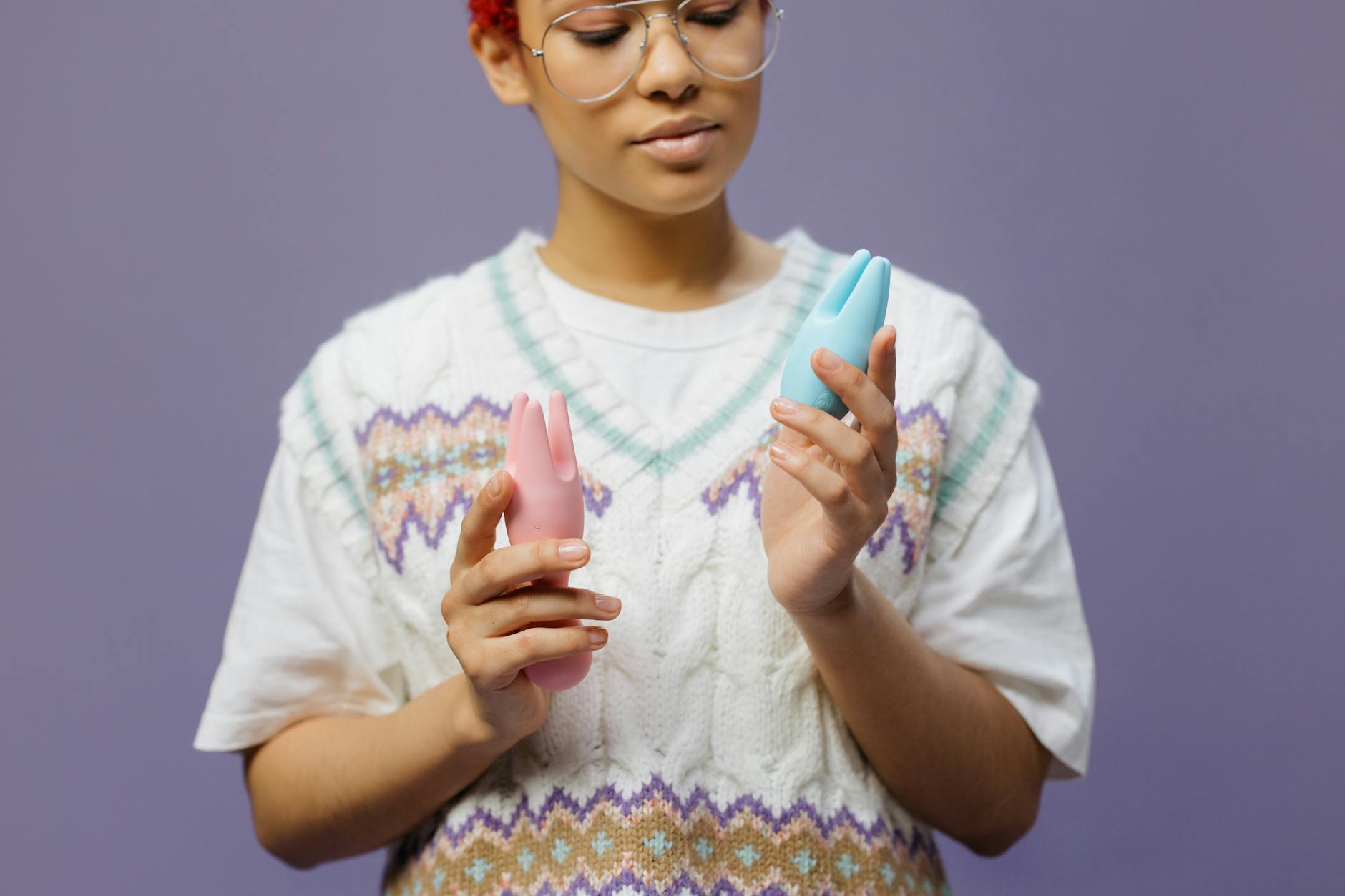
Photo by cottonbro studio on Pexels
The communication piece if you have a partner
If someone else is using the lemon sexual toy on you or with you, they need to understand tissue variation too. A partner who's used to someone with thin, highly responsive tissue might apply the device too fast or too hard on you. That's not a compatibility problem. It's just a communication gap.
Tell them: "This needs longer warm-up and a slower start." Tell them what you're feeling or not feeling so they can adjust. Many partners assume they're doing something wrong when the issue is actually just a mismatch between their experience and your tissue.
Thicker tissue can mean deeper sensation
Here's something that rarely gets mentioned: thicker tissue often has a lower surface sensitivity but deeper nerve response. Once you get the right approach dialed in, the sensations can be more focused and intense than on thinner tissue. It just takes patience to get there.
Many of my clients with thicker vulva tissue report that once they figured out the right settings and warm-up time, their lemon vibrators became their most powerful tools. The initial frustration flips into a real advantage.
FAQ: Thick Tissue and Lemon Vibrators
Why does my lemon vibrator feel weaker than my friend's?
Tissue thickness changes how suction pressure registers on your body. Thicker tissue needs longer warm-up, slower starting intensity, and sometimes a different pattern to feel the same sensation your friend gets instantly. It's not the device. It's the interaction between the device and your unique anatomy.
Should I use a higher intensity setting if I have thick vulva tissue?
Not necessarily. Higher intensity can actually overstimulate thin tissue and create discomfort. Start with medium intensity and slower patterns instead. Build from there. Many people with thicker tissue find they never need maximum intensity, just smarter use of mid-range settings.
Does lube really make a difference with a lemon clitoral vibrator on thick tissue?
Yes. Lube improves the seal between the device and your body, which increases suction efficiency. On thicker tissue especially, even a small improvement in seal quality translates to noticeably better sensation. Use water-based lube and reapply if it dries out during longer sessions.
Can thick vulva tissue change over time?
Yes. Hormonal shifts, aging, and changes in activity level all affect tissue thickness. If your lemon vibrator stopped working as well as it used to, hormonal change might be the reason. If you used to need a lot of warm-up and now feel sensation faster, that's also normal. Your body is constantly evolving.
Is there a specific lemon vibrator setting for thick tissue?
There's no universal answer because everyone's anatomy is different. But start with pattern 2 or 3 at intensity 2, give yourself at least 15 minutes, and adjust from there. Most people with thicker tissue find that slower, pulsing patterns work better than rapid settings.
If thick tissue is the issue, should I switch to a different clitoral vibrator?
Not immediately. Try the adjustments outlined here first: longer warm-up, lower starting intensity, different patterns, and lube. Most people solve the problem this way. If you still feel disconnected after a full week of trying different approaches, exploring other devices makes sense. Understanding how lemon vibrators work for different body types offers more detailed guidance.
The bottom line
Thick vulva tissue doesn't mean lemon vibrators won't work for you. It means they work differently, and that difference is fixable. Longer warm-up, patient intensity building, and the right pattern will unlock the sensation that seems elusive right now.
Your body isn't broken. The device isn't weak. They just need a better introduction. Give yourself permission to spend time figuring out what works, and you'll find that your thick tissue becomes an asset, not a barrier.