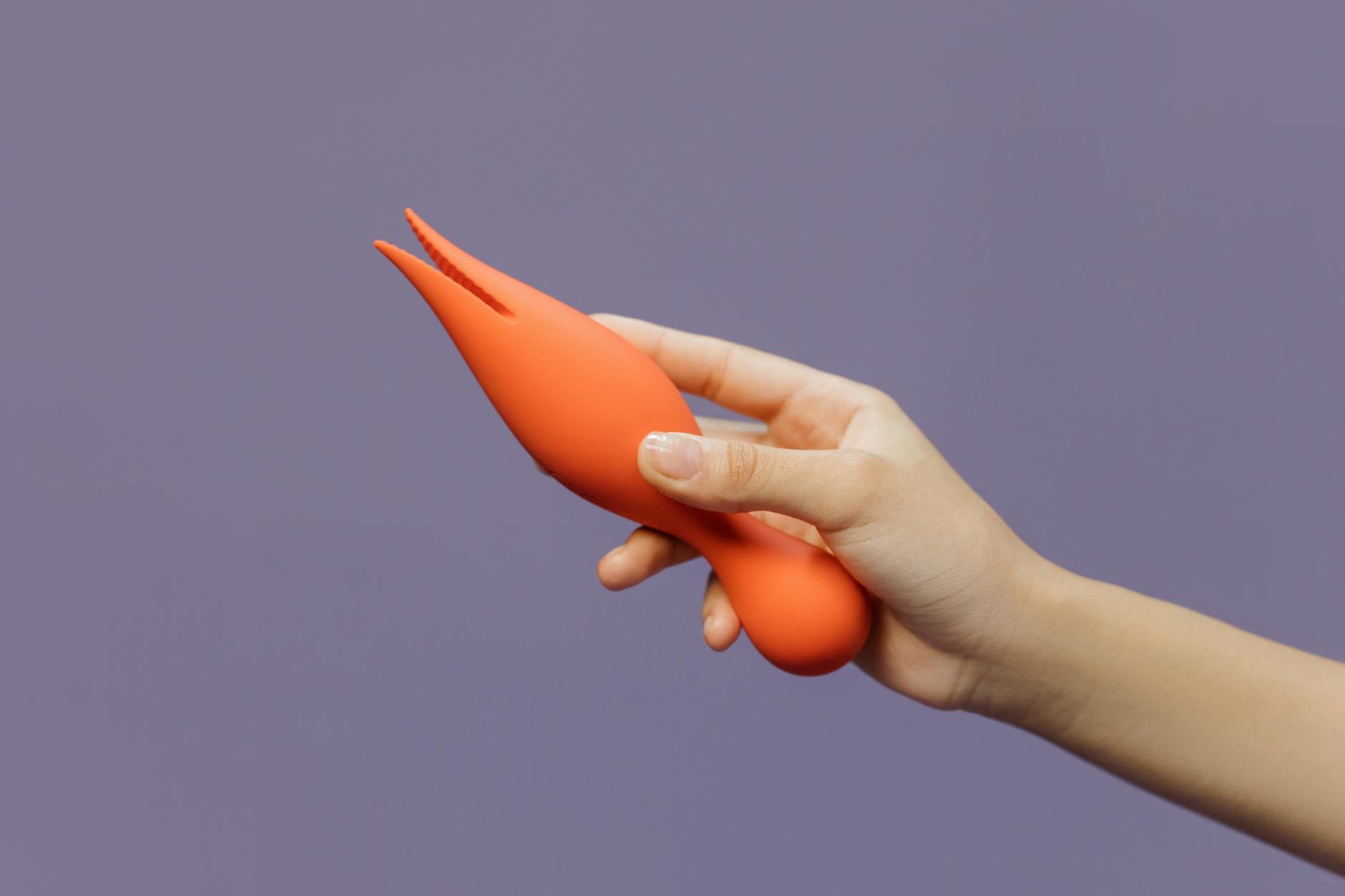
How to Use a Lemon Vibrator if Antidepressants Affect Your Arousal
Let's be real. SSRIs work. They lift the fog, steady the panic, make mornings feel survivable again. And then they flatten your ability to feel anything below the waist.
This isn't in your head. Antidepressant-induced sexual dysfunction affects 40 to 60 percent of people taking SSRIs, SNRIs, and tricyclic antidepressants. Arousal takes longer to build. Orgasm feels distant or impossible. The urge itself just... evaporates. You're not broken. Your medication is doing exactly what it's designed to do: it's dampening the neural signals that drive both depression and desire.
The good news: this is one of the most fixable sexual side effects. And a Lemon Clitoral vibrator, used strategically, can be the bridge that reconnects you to pleasure while you figure out the medical piece.
How antidepressants actually change arousal
SSRIs work by increasing serotonin availability in your brain. Serotonin is the calm neurotransmitter, the one that tells your nervous system everything is fine. Dopamine, by contrast, is the want neurotransmitter. It drives desire, motivation, and the cascade of physical arousal that leads to orgasm.
When serotonin goes up, dopamine signaling often goes down. Your brain becomes less reactive to sexual stimuli. Touch that used to spark electricity now registers as just... touch. Mental arousal, the fantasies and thoughts that used to trigger physical response, simply doesn't happen with the same intensity.
This happens at every stage. Arousal takes longer to initiate. Orgasm takes longer to reach. Sometimes it doesn't arrive at all, no matter how much time or effort. And the urge itself, that background hum of wanting sex, can disappear entirely.
The kicker: none of this means your body is broken. Your nerve endings still work. Your orgasm capacity is still there. The pathway just requires a louder signal to activate.
Why external stimulation matters more now
Your brain's dopamine system is quieter. Which means internal stimulation—fantasy, anticipation, the feeling of touch alone—often isn't enough to push you over the threshold. You need stronger, more direct input to trigger the neural chain reaction that leads to orgasm.
This is where the Lemon Clitoral vibrator becomes less of a luxury and more of a practical tool. Vibration bypasses the weakened dopamine pathway by delivering consistent, intense stimulation directly to the clitoris. It's not that the vibration does anything your body couldn't theoretically do—it's that it does it with the force and consistency your medicated nervous system now requires.
Think of it like cranking up the volume on a song you can barely hear. The song hasn't changed. Your hearing has. The vibrator isn't replacing something your body lost. It's providing enough intensity that your brain's muffled pleasure circuits finally fire.
The arousal warm-up strategy
When antidepressants flatten baseline arousal, the old approach of a few minutes of foreplay rarely works. You need a different timeline and a more deliberate strategy.
Start with low stimulation. If you're using a Lemon Clitoral vibrator, begin on pattern one or two. Don't jump to intensity. Let your body gradually recognize what's happening. Many people on SSRIs report that arousal builds slowly but does build, if you give it the runway.
Budget 20 to 30 minutes. This isn't a delay. This is normal for medicated bodies. Set a timer if you need to. Knowing you have a full half hour removes the pressure to rush, which paradoxically helps arousal develop faster.
Separate mental arousal from physical. Since your dopamine is quieter, focus first on the physical input—the vibration—and let mental arousal follow. Many people find that if they wait for desire to appear first, nothing happens. But if they start the vibrator and give their body 10 minutes of input, desire shows up halfway through. Your brain catches up.
Use lubrication. Tissue sensitivity is often reduced on SSRIs. Water-based lubricant makes everything feel more intense without adding pain. More sensation means more input for your dampened nervous system to work with.
Building back your sensation map
Antidepressants don't just affect genital sensation. Many people report that touch all over their body feels muted. The reward signal that used to come with a partner's hand on your arm, or kissing, or skin-to-skin contact just... isn't there.
You can rewire this, but it takes intention. Use a Lemon Clitoral vibrator as part of a broader sensory reset.
Spend time with the vibrator at different intensities. Start low and slow. Notice what you feel at each level. Your brain's pleasure mapping has gotten rusty, and you're retraining it. After a week or two of regular use, many people notice that sensation starts returning to baseline. The vibrator seems less intense because your natural response is coming back online.
Extend this to partnered touch too. If you have a partner, ask them to touch you without sexual expectation while you're using the vibrator. Your nervous system starts linking their touch with the pleasure signal from the vibrator. Over time, anticipation of their touch alone starts to rebuild dopamine activation.
It takes repetition. That's not weakness. That's neuroscience.
When to talk to your doctor
Here's what I tell everyone: a Lemon Clitoral vibrator is a management tool, not a cure. It can help you access pleasure despite the medication. But if sexual dysfunction is significantly affecting your quality of life, your doctor needs to know.
You have several medical options. You can ask about switching to an antidepressant with a lower sexual side effect profile. Bupropion (Wellbutrin), for instance, often has minimal sexual impact. You can also discuss adding another medication specifically to counteract sexual side effects, like buspirone. Some people benefit from adjusting the timing of their dose, or taking a planned break (though this is only safe under medical supervision).
The point: if the vibrator helps you manage but you're still struggling significantly, don't just accept it. Your psychiatrist or primary care doctor can offer real solutions.
The patience piece
One thing I notice with people navigating antidepressant side effects is shame about how long pleasure takes now. Twenty minutes to warm up. Thirty minutes to reach orgasm. The feeling that their body is broken or slow.
It's not. Your medication is working. And your body is still capable of profound pleasure. The timeline is just different. If you can let go of how it used to be, and actually pay attention to what you're feeling in this moment, the quality of arousal and orgasm often feels deeper, more grounded, than before.
This isn't spiritual nonsense. Slowing down forces attention. Attention creates presence. Presence is where real pleasure lives.
Using a Lemon vibrator with a partner
If you have a partner, this becomes a joint project. Let them know upfront that you need longer warm-up time and more direct stimulation. This isn't rejection of them. It's a physiological reality of how your nervous system is currently wired.
Many partners feel relieved to understand that the slowness and difficulty reaching orgasm isn't about them. They weren't doing anything wrong before. The antidepressant changed the equation.
Consider using a Lemon Clitoral vibrator together. If they're stimulating you internally or kissing your neck while you use the vibrator, the combined input often works faster than either alone. Your medicated nervous system needs robust multi-sensory input to really wake up.
And honestly: knowing your partner sees you using the vibrator, understands what it takes for you to come now, and chooses to be part of that anyway? That's profound intimacy.
When sensation starts returning
For many people, after a few months of consistent use, sensation starts coming back. Your nervous system adapts. The baseline quietness lifts slightly. The vibrator that felt necessary for orgasm three months ago might feel optional now.
This is actually a good sign. It means your dopamine system is healing or adjusting to the new baseline. Some people find they don't need the vibrator as much. Others find they still prefer it because the experience is simply better with it. Both are fine.
The Lemon Clitoral vibrator isn't a crutch that you're supposed to graduate away from. If it helps you access pleasure, keep using it. Your body and your medication are in conversation with each other. The vibrator is just part of how you stay in that conversation with yourself.
Frequently Asked Questions
How long does it usually take for arousal to come back after starting an antidepressant?
The sexual side effects of SSRIs typically emerge within the first two weeks and plateau by week four. Whether or how much arousal returns depends on many factors: the specific medication, your dose, how long you've been taking it, your baseline neurobiology. Some people experience gradual improvement over months. Others plateau and find that using external tools like a clitoral vibrator becomes part of their long-term approach. It's not a timeline—it's individual. If nothing has shifted after three months, that's worth discussing with your prescriber.
Can I use a Lemon Clitoral vibrator every day while on antidepressants?
Yes. Daily use is safe and often helpful. In fact, regular use helps your nervous system recalibrate. Some people find that daily vibrator use for two to three weeks creates a noticeable return of natural arousal, because repetition helps retrain your dopamine sensitivity. Consistency matters more than intensity. Start at low settings, use for 15 to 20 minutes, and give yourself grace if orgasm doesn't happen every session. The goal is rebuilding the neural pathway, not necessarily finishing.
Should I try to reach orgasm every time I use the vibrator, or is the sensation enough?
Let go of the orgasm goal for now. Seriously. When you're on SSRIs and arousal is suppressed, chasing the finish line creates pressure, which tightens everything, which makes it harder. Instead, focus on sensation. Notice the vibration. Notice how different speeds feel. Notice when your body starts responding, even a tiny bit. This takes the shame and performance pressure out of it. Many people report that orgasm actually comes easier once they stop demanding it.
What if I reach orgasm really easily on the vibrator but then struggle with my partner?
This is normal and fixable. Your body recognizes the intense, consistent input from a vibrator. A partner's touch, even a really good partner, is more variable and less intense. Your nervous system has gotten used to the high signal. Here's the move: use the vibrator during partnered sex sometimes. A hand or mouth plus a vibrator often creates the input level your medicated body now requires. There's no rule that says you can't. After a few months of this, many people find their body starts responding to partner touch alone again. But there's no rush. Some people continue blending vibrator use with partnered play indefinitely. That's fine too.
Is it okay to use a Lemon Clitoral vibrator instead of trying to have sex with my partner?
It depends on what you and your partner want. If you both agree that vibrator-based solo pleasure is part of your intimacy landscape, that's completely valid. But if you both want partnered sex and it's not happening because the vibrator is easier, that's worth examining. Sometimes what's really happening is that you need the vibrator as a bridge, not as a replacement. Consider how to use a Lemon vibrator with a new sexual partner, which covers communication strategies that often help here. The vibrator isn't the problem. The conversation is the solution.
Can switching antidepressants actually fix the sexual side effects?
Yes, often. Some antidepressants have much lower sexual side effect profiles than others. Bupropion, mirtazapine, and some others are gentler on arousal and orgasm. But switching isn't automatic—your psychiatrist needs to weigh the sexual benefits against whether the new medication treats your depression as effectively. Sometimes the trade-off isn't worth it. Sometimes it is. And sometimes the original medication is the right one, and you manage the sexual side effects with tools like a Lemon Clitoral vibrator and the strategies above. There's no one right answer. It's a conversation with your provider.
Will using a vibrator make me dependent on it?
No. This is a common fear, and it's not how neuroscience works. Using a vibrator helps your nervous system recognize and respond to pleasure stimulation. It's retraining, not dependence. If anything, many people find their natural arousal improves with regular vibrator use, because repetition recalibrates their dopamine sensitivity. You might always prefer using a vibrator for certain kinds of pleasure, and that's fine. Preference isn't dependence.
Antidepressants are worth the sexual side effects if they're saving your mental health. Full stop. But you don't have to accept flattened pleasure as the cost of feeling stable. A Lemon Clitoral vibrator, combined with patience and understanding your pleasure cycle, can help you reclaim arousal and build back the sensation your medication has muffled.
The pathway just looks different now. That's not worse. It's just different. And often, the slower, more intentional approach to pleasure that medication forces you into becomes the better one anyway.