Let's talk about what actually changes
There's this weird cultural moment where we hit 30 and suddenly everyone acts like your body becomes a different, lesser machine. Slower recovery. Drier skin. Less responsive. And yes, some of that is real. But here's what nobody explains: those biological shifts don't make pleasure worse. They change the shape of pleasure. And if you're using the right tool, they make it better.
I've worked with hundreds of people navigating pleasure after 30, and the pattern is consistent. The ones who feel like they've lost something are usually reaching for the same stimulation method they've always used. The ones who feel like they've unlocked something? They've switched tactics.
Enter: lemon vibrators and the science of suction.
How your clitoris changes (and stays the same)
Your clitoris has around 8,000 nerve endings. That number doesn't change with age. What does change is the tissue surrounding it. After your late twenties, collagen production in the vulva gradually decreases. The skin gets a bit thinner. Blood flow patterns shift slightly. The clitoral glans becomes more sensitive in some ways and less responsive to direct vibration in others.
This is where most people get stuck. They assume "less responsive to vibration" means "less responsive, period." Wrong. It means the type of stimulation that produces the fastest, easiest orgasm at 25 might need an update at 35 or 45.
Direct vibration against thinning tissue can feel sharp, almost abrasive. Suction, though? Suction works differently. Instead of hammering nerve endings with rapid repetition, it creates negative pressure that draws tissue gently into the mouth of the device. It stimulates the entire clitoral structure, not just the glans.
The neurology of suction vs. vibration
Your brain doesn't actually care whether stimulation comes from buzzing or suction. It cares about type of sensation. Neuroscientists break this down into a few categories: pressure, temperature, texture, and proprioception (your sense of where your body is in space).
Traditional vibrators are phenomenal at delivering rapid pressure change. Think of it like rapid-fire tapping. Your nervous system lights up. It works. At 25, when tissue is thicker and more forgiving, rapid pressure change is efficient.
Suction toys like the Lem create something different: sustained, variable pressure. The sensation builds more slowly. It engages different mechanoreceptors in your clitoral tissue. For people whose tissue has thinned or become more sensitive, this gentler engagement often feels more pleasurable and produces stronger, longer orgasms.
There's also a psychological component. Suction feels more intimate than vibration. It mimics what a partner might do with their mouth. That sensory memory plus the neurological difference adds up to a genuinely different experience.
Why lemon suction vibrators specifically
Lemon vibrators, like the Lem, combine suction with subtle pulsing. You get the benefits of both mechanisms working together. The suction does the heavy lifting, drawing tissue gently. The pulsing adds rhythmic intensity that builds arousal without relying on aggressive vibration.
This combination is particularly effective for anyone whose clitoris has become more sensitive with age, after hormonal shifts, or due to medications. You can start at low intensity and build gradually. You're not forced to choose between "way too intense" and "not enough."
The shape matters too. Lemon clitoral vibrators are designed to sit flush against the vulva without requiring pressure or positioning. That means less hand fatigue, more consistent contact, and the ability to explore different angles and intensities without losing the seal.
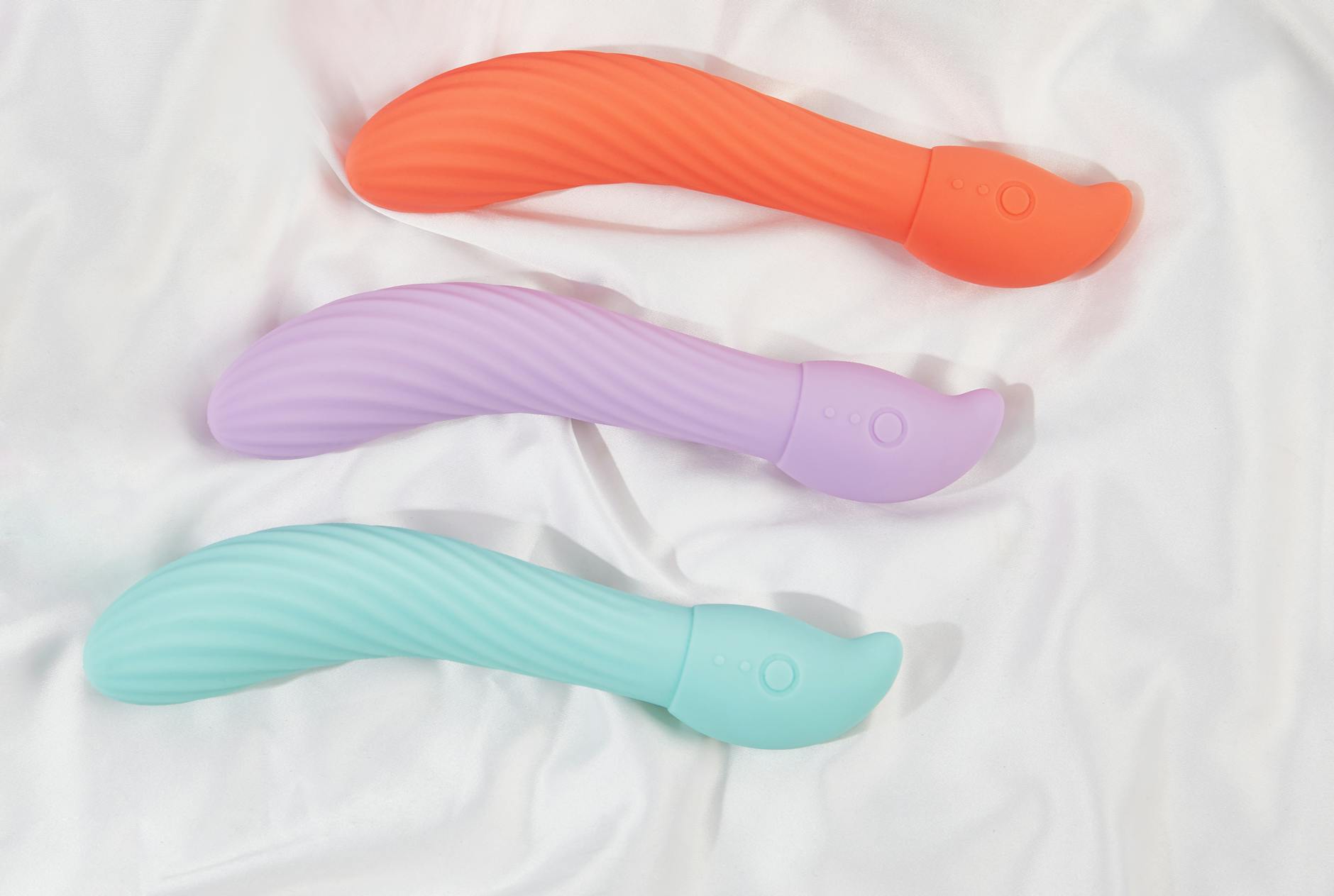
Photo by IFONNX Toys on Pexels
What happens to arousal patterns after 30
Arousal doesn't disappear after 30. It changes shape. Most people need longer to build excitement. Foreplay might go from 5 minutes to 15. Your body might need more mental engagement, less pure physical speed. Spontaneous arousal often gives way to intentional arousal, where you're actively choosing pleasure instead of it arriving unbidden.
That sounds like loss. In therapy, I reframe it: it's specificity. You know what you want. You know what your body actually responds to. You're not working against your own nervous system anymore.
Lemon vibrators align with this shift. You're not trying to trick your body into responding with aggressive stimulation. You're working with what's actually there now. The slower build of suction-based stimulation mirrors the way arousal naturally unfolds after 30.
How to actually use them differently
Here's the thing most guides miss: buying a suction vibrator isn't the same as using it right. I see people pick up a lemon vibrator, use it like a traditional vibrator (lots of movement, high intensity immediately), and think it's not working.
Slower is better. Start at pattern 1 or 2. Let the suction create sensation without your hand doing much. You're not supposed to be thrusting or moving it around frantically. You're creating a seal and letting the device do the work.
Warmth helps too. A warm vulva is a more responsive vulva. Spend time on foreplay, whether solo or partnered. Let blood flow there. That's not extra work. That's the actual pleasure part.
Angle matters more with suction toys. Because they work by drawing tissue, different angles create different sensations. Some people find a slight tilt toward the clitoral body creates the strongest sensation. Others prefer direct centering. Experiment. Your body will tell you.
The pleasure curve actually gets better
This is the thing I wish someone had told me at 25. Your thirties, forties, and beyond aren't a slow decline in sexual capacity. They're a narrowing and deepening. You stop chasing the fantasy and start actually enjoying the reality.
Orgasms often get stronger. They last longer. Your refractory period might increase (you need more time between orgasms), but when you do come, it's deeper and more full-body. Your nervous system has had decades to learn what works.
The right tool amplifies that. A lemon clitoral vibrator meets your body where it actually is now, not where it was. That alignment is where the real pleasure lives.
Common questions about suction vibrators after 30
Will a lemon vibrator work if I have a less sensitive clitoris?
Yes. In fact, sensitivity changes don't really determine whether suction works. What matters is tissue thickness and tolerance for direct vibration. Plenty of people with "less sensitive" clitorises find suction toys work better because the sensation is more even and less sharp. Start low and experiment.
Do I need to stop using regular vibrators?
Not at all. Variety is good. Some people use both depending on mood or what kind of orgasm they're chasing. A suction vibrator doesn't replace other toys. It's an addition to your toolkit that might work better as your body changes.
How long does it take to actually feel something with a suction vibrator?
This varies wildly depending on where you're starting from. Some people feel it immediately. Others need a few sessions to understand what they're feeling and how to respond. You're not broken if it takes a minute. Your nervous system is relearning a new sensation pattern.
Can my partner use a lemon clitoral vibrator on me?
Absolutely. The hands-free suction means a partner can use it while also using their hands elsewhere. That flexibility is one of the reasons people find suction toys work well in partnered contexts, especially after 30 when multisensory engagement often matters more.
Is there an age where suction vibrators become "the best" option?
Not really. Some people find them work better at 32. Others at 45. It depends on tissue changes, hormonal shifts, medications, and personal preference. There's no threshold. If it feels good, it works.
Will using a suction vibrator change how I respond to other stimulation?
Not meaningfully. Your nervous system is flexible. You can enjoy suction vibrators and also enjoy traditional vibrators, fingers, or partnered touch. Pleasure is additive, not subtractive.
The bigger picture
After 30, pleasure becomes less about performance and more about presence. You're not trying to prove anything. You're not worried about speed. You're exploring what actually feels good right now.
Lemon vibrators, with their suction-based approach, are built for exactly this phase. They reward slowness. They work better when you're paying attention. They're tools for people who've stopped chasing the fantasy and started living the reality.
If traditional vibrators have stopped working the way they used to, that's not a sign your pleasure is fading. It's a sign your body is ready for something different. And honestly? Different is often better.
Want to explore what works best for your body right now? Start with our beginner's guide to clitoral vibrators, or learn exactly how to get the most from suction stimulation. Your pleasure matters, and your body deserves tools that actually fit where you are.